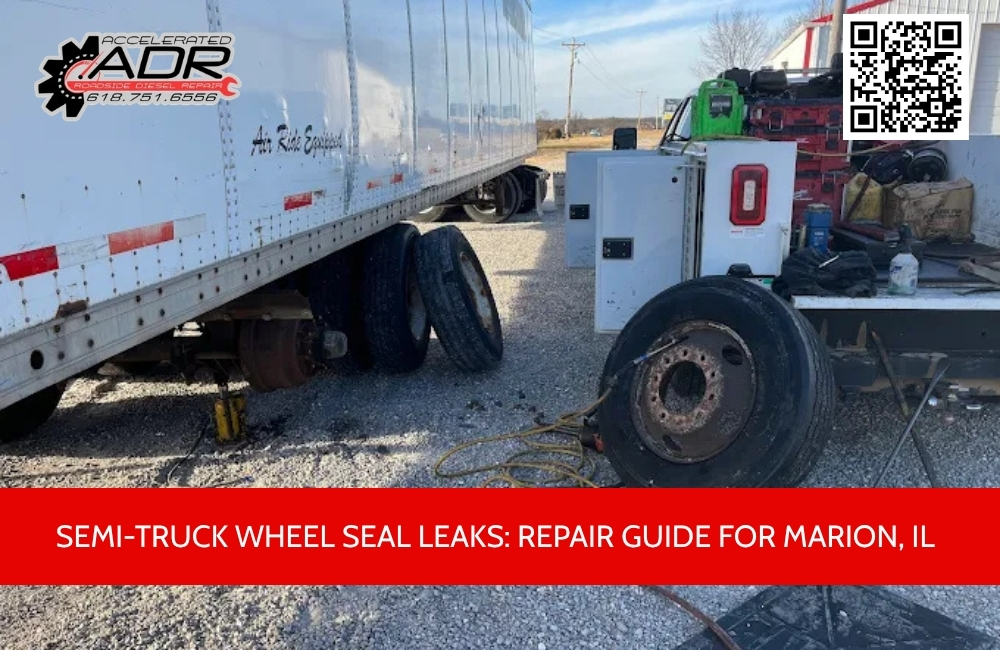
Semi-Truck Wheel Seal Leaks: Repair Guide for Marion, IL
A small amount of oil around a truck wheel may not seem like an urgent problem, especially when the vehicle continues driving normally. However, a leaking wheel seal can gradually reduce lubrication inside the wheel hub, damage bearings, contaminate brake components, and create serious safety concerns. For commercial drivers traveling through Marion, Illinois, recognizing these leaks early can prevent expensive repairs and unexpected roadside delays.
Professional Mobile Truck Repair can help identify wheel-end problems when a truck develops symptoms away from its maintenance facility. Understanding how wheel seals work, why they fail, and when a vehicle should be removed from service allows drivers and fleet owners to make informed decisions before a minor leak becomes a major mechanical failure.
What Is a Semi-Truck Wheel Seal?
A wheel seal is a protective component that keeps lubricant inside the wheel hub while preventing dirt, moisture, and road contaminants from entering the bearing assembly.
Commercial truck wheel bearings require proper lubrication to operate under heavy loads and continuous rotation. Depending on the axle and hub design, the wheel end may use oil or grease.
When a seal loses its ability to contain lubricant, the wheel-end assembly becomes vulnerable to increased friction, overheating, contamination, and premature bearing wear.
A wheel seal may be relatively small compared with other truck components, but its condition directly influences wheel-end reliability and vehicle safety.
How to Recognize a Wheel Seal Leak
Wheel seal problems are not always accompanied by dashboard warnings. Drivers often discover them through visual inspections or changes in vehicle behavior.
Oil Around the Inside of the Wheel
One of the clearest signs of a leaking seal is lubricant collecting on the inner wheel surface, brake backing plate, or surrounding components.
Fresh oil may appear wet and shiny, while older leakage can attract road dust and create a thick, dark residue.
Because the inner wheel area is less visible during a casual walkaround, drivers should pay particular attention to accessible wheel-end surfaces during inspections.
Unexplained Lubricant Loss
Some oil-lubricated hubs have inspection windows that allow drivers to check lubricant levels.
A declining level without an obvious external explanation may indicate leakage. Repeatedly adding lubricant without identifying where it is escaping can conceal a developing wheel-end problem.
Unusual Heat or Burning Odors
Insufficient lubrication increases friction inside the hub. As bearings operate with inadequate lubricant, temperatures may rise.
A burning smell, smoke, or unusually hot wheel end requires immediate attention. Drivers should stop safely and request professional assistance rather than touching potentially overheated components.
Why Wheel Seals Fail on Commercial Trucks
Wheel seals operate under demanding conditions involving rotation, heat, vibration, heavy loads, and exposure to road contaminants.
Understanding the cause of failure is important because installing a replacement seal without addressing the underlying problem may lead to another leak.
Bearing Wear and Excessive Movement
Wheel bearings maintain the correct relationship between the hub and spindle. Excessive bearing movement can interfere with the seal's ability to maintain contact with its sealing surface.
If bearing wear or incorrect adjustment contributes to the leak, replacing the seal alone may not provide a lasting repair.
Damaged Sealing Surfaces
Corrosion, grooves, scratches, or damage on the spindle or other sealing surfaces can prevent a new seal from functioning correctly.
Technicians should inspect these surfaces during repair rather than assuming the replacement component will solve every leakage problem.
Incorrect Installation
Wheel seals must be installed according to the component manufacturer's specifications.
Improper installation depth, incorrect tools, contamination, or damage during assembly can shorten seal life.
This makes careful installation particularly important for commercial vehicles that accumulate substantial mileage.
Can a Leaking Wheel Seal Affect Truck Brakes?
Yes. A leaking wheel seal can allow lubricant to reach brake friction surfaces, reducing braking effectiveness and creating uneven brake performance.
Oil contamination is particularly concerning because brake linings depend on controlled friction to slow the vehicle.
A contaminated brake assembly may produce reduced stopping performance, pulling during braking, or inconsistent braking response.
Drivers should not assume that wiping away visible oil restores brake safety. Contaminated friction materials may require replacement according to manufacturer procedures.
A Mobile DOT inspection Metropolis IL can help identify visible wheel-end leaks and brake-related defects, although a complete mechanical assessment may be necessary to determine the extent of contamination.
Why Wheel Seal Problems Matter on Marion Freight Routes
Marion's location near Interstate 57 and Illinois Route 13 makes it an important transportation area for regional freight, distribution, construction, and commercial deliveries.
Trucks operating through Southern Illinois often combine highway travel with local stops, loaded trailers, and extended operating hours.
These conditions place sustained demands on wheel bearings and seals.
A small leak discovered before departure is considerably easier to manage than a damaged wheel bearing discovered after several hours of highway driving.
Fleet managers should investigate recurring leakage before assigning the affected truck to another long-distance route.
Is It Safe to Drive With a Leaking Wheel Seal?
A leaking wheel seal should be professionally assessed before normal operation continues.
The seriousness depends on lubricant loss, bearing condition, brake contamination, and the overall condition of the wheel end.
If the hub has significant lubricant loss, abnormal heat, unusual noise, visible brake contamination, or excessive movement, the truck should remain out of service until a qualified technician determines the appropriate repair.
Drivers searching for Emergency diesel truck repair near me should explain that the problem involves a wheel hub or seal. This helps the service provider prepare for wheel-end diagnosis rather than engine troubleshooting.
What Happens During a Wheel Seal Repair?
A proper wheel seal repair involves more than removing the damaged seal and installing another one.
The technician must evaluate the condition of the hub, bearings, sealing surfaces, lubricant, and surrounding brake components.
Inspecting the Wheel-End Assembly
The wheel end should be examined for evidence of bearing damage, overheating, contamination, and abnormal movement.
If the lubricant contains metallic particles or the bearings show damage, additional repairs may be necessary.
Installing the Correct Replacement Seal
The replacement must match the axle and hub specifications. Incorrect dimensions or installation procedures can cause premature failure.
Bearing adjustment, lubricant selection, and assembly procedures must follow the applicable manufacturer's requirements.
Verifying the Completed Repair
After assembly, the technician should confirm proper lubrication, inspect for leakage, and verify that the wheel end meets the required operating specifications.
If brake components were contaminated, their condition must also be addressed before the vehicle returns to service.
Mobile Wheel Seal Repair Versus Shop Service
Some wheel-end repairs can be completed at a suitable fleet yard or roadside service location, provided the technician has the necessary equipment and safe working conditions.
However, severe bearing damage, spindle damage, extensive brake contamination, or unsafe roadside conditions may require a Truck Repair Shop.
Drivers looking for Truck Repair Near Me should prioritize accurate diagnosis and safe repair conditions rather than assuming every wheel seal replacement can be completed beside the highway.
Professional 24/7 roadside assistance for trucks can help determine the safest recovery option when a wheel-end problem develops unexpectedly.
Wheel Seal Leaks on Commercial Trailers
Trailer wheel ends require the same attention as tractor wheel ends.
A leaking trailer seal may remain unnoticed because drivers spend less time observing individual trailer axles.
Lubricant loss, contaminated brakes, and bearing damage can still create serious problems.
Professional Mobile trailer repair Metropolis IL can help assess trailer wheel-end concerns when a defect develops during transportation.
Related Maintenance Concerns for Mixed Fleets
Businesses operating commercial trucks alongside construction machinery and warehouse equipment should apply similar inspection principles across their vehicles.
Heavy equipment repair Metropolis IL and Forklift repair Metropolis IL may involve investigating lubricant leaks, bearing wear, and component contamination.
Hydraulic fluid leakage, however, is different from wheel-hub lubricant loss. Damaged hydraulic lines may require Hydraulic hose replacement Metropolis IL, and suspected high-pressure leaks should never be checked with bare hands.
Likewise, Diesel engine repair Metropolis IL addresses engine-related concerns rather than wheel seal failure. Identifying the actual fluid source helps prevent unnecessary repairs.
Large motorhome owners seeking RV repair Metropolis IL should also investigate lubricant around wheel hubs before extended travel.
Frequently Asked Questions
How long does a semi-truck wheel seal last?
There is no universal replacement interval. Seal life depends on installation quality, bearing condition, operating temperatures, mileage, and manufacturer specifications.
Can a new wheel seal leak shortly after installation?
Yes. Incorrect installation, damaged sealing surfaces, excessive bearing movement, or an incorrect replacement part can cause premature leakage.
Does a leaking wheel seal always require new bearings?
No. Bearings should be inspected and replaced when damage, excessive wear, contamination, or manufacturer requirements justify replacement.
Can wheel seal leakage cause a wheel-end fire?
Severe lubricant loss can contribute to bearing overheating, while contaminated or dragging brakes may generate additional heat. These conditions can increase fire risk and require immediate attention.
Protect Your Truck With Early Wheel-End Diagnosis
Wheel seal leaks should never become a routine maintenance issue that drivers simply monitor without investigation. Early diagnosis helps protect bearings, brake components, and the overall wheel-end assembly.
For commercial drivers and fleet owners around Marion and Southern Illinois, professional inspection is the safest way to determine whether a leaking seal requires replacement or more extensive repairs.
If you discover lubricant around a wheel, arrange an assessment before your next dispatch.
Accelerated Roadside 24/7 Mobile Truck & Trailer Repair
1807 Mc Crary St, Metropolis, IL 62960, United States
Phone: +1 (618) 751-6556